

Here’s a short video about rom-coms, and in particular the inevitable scene where the protagonist runs through their home city (or an airport, maybe) in order to tell someone they love them. There are some totally iconic visuals in the video, but it was this bit, in the voiceover, that got to me:
In the modern day, we live in a world without a cosmic moral order, a framework of meaning to which everyone automatically subscribes. We had one for a while. But round about the year 1700, give or take a century, that framework started cracking, fragmenting, losing its authority, and the burden of finding meaning shifted onto individuals. We all became desperate seekers in a confusing and disjointed world.
Disjointed the world is, and burdensome living in it can be. Recently I’ve found myself searching for coherence in cultural experiences — live music, mainly, but really anything that I can witness alongside others, and be sure that we’re all feeling something. As if through being in the same room, swaying to the same rhythm, each of our self-constructed moral frameworks becomes a little more stable.
But still the world is mostly confusing, and in spite of the moral-authoritative orders they may have lived under I suspect that our ancestors were plagued with confusion as well. Take this, from Adam Mastroianni’s excellent Experimental History newsletter:
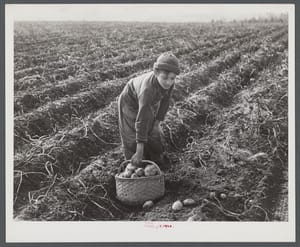
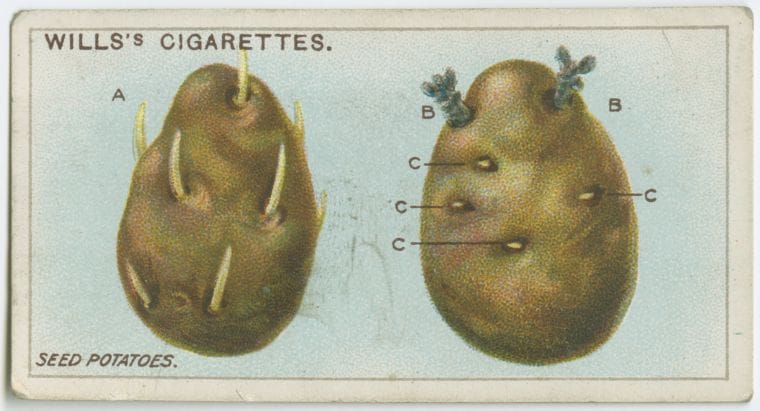
As late as 1813, some parts of the European medical establishment believed that potatoes cause leprosy. (Don’t even get ‘em started on scrofula!) Potato historian Redcliffe Salaman suggests that people were skeptical because potatoes look kinda weird, they grow in the ground, and you plant them as tubers rather than seeds, which are all extremely suspicious things for a food to do.
- Recently my wife and I watched The Gleaners and I, Agnès Varda’s totally weird documentary about the relationship between farmers, and peasants, and the precise moment when a harvest season begins and ends.
- Here’s an interesting podcast episode on the wild mushroom trade, and the social and physical infrastructure required to glean feral fungi, and transport them to your plate.
- “Pen knives” are so named because they were originally used to cut points onto quills so that they could be used to write with ink.
- I’m listening to Rosalia’s new album, Lux, a lot right now, and also Dijon’s Baby; I think both are fantastic. Also on rotation (mostly while writing) is The Disintegration Loops by William Basinski.
- Here’s a workshop and showroom tour of the Melanzana cut-and-sew shop in Leadville, Colorado. Here’s an interview with Melanzana’s founder, Fritz Howard. Melanzana produces all of their clothing in Leadville, a town of about 2600 people which, at over ten thousand feet above sea level, is the highest incorporated city in the US. This makes it challenging for them to expand production, and ultimately constrains their growth as a company. They handle this partly by selling the vast majority of their product in-person at their showroom, which actually requires appointments for most purchases and has a per-customer, per-visit limit on the quantity of clothing one can purchase.
I find Melanzana’s business strategy counterintuitive and unexpected, and I suppose it helps to explain the fact that I was totally unaware of Melanzana until a couple of months ago, when I was given one of their hoodies more or less by accident. What has remained a mystery, though, is the honestly shocking amount of attention this hoodie has received since then; it’s easily the most commented-upon garment I’ve ever owned, with both friends and strangers calling the brand out by name and complimenting the sweatshirt’s frumpy yet somehow athletic drape. I guess this is all to say that Melanzana seems to have forged their own idiosyncratic moral framework, and has somehow managed to convince a large number of New Yorkers that that framework is worthy of their attention. - Also re: factory tours, I noted with interest this, from Jim:
About factory tours, one of my favorites was the Yuengling tour in Pottsville, PA. They let visitors look inside brewing tanks, stand next to the control panels, and walk so close to the canning lines you can get wet from the wash water. This was 10 years ago, I do not know how they got away with it.
- Here’s a pretty good video about NYC’s food carts: their supply chains (a not-at-all automated bakery in the Bronx), their history, and the laws that regulate them.
- Fran Sans is a typeface, designed by Emily Sneddon and based on the LCD displays in SF Muni’s Breda light rail vehicles — which were officially retired last month.
- Tom Whitwell’s always-excellent “52 things I learned this year” post; I’m honored to be listed under #20.
- Poland Spring has been selling water since at least 1860. The company initially packaged their spring water in wooden casks, but in 1876 they introduced their first bottle. Made of clear, brown, or green glass, the bottle was shaped to look like Moses. It was apparently popular with tourists, who would travel to Maine on their honeymoons and bring back Moses bottles to (??) store on their shelves at home.
- “Zohran Mamdani hires car-hating activist Ben Furnas for NYC transportation team.”
- Here’s one way to structure your family life: Joshua Slocum arrived in Sydney, Australia on January 9th, 1871. Over the next twenty-two days he met and married Virginia Walker. The day after they married, the new couple boarded the ship that Slocum was captaining; they would spend the next thirteen years sailing around the world. Virginia had seven children, all either at sea or in foreign ports, four of whom survived to adulthood. Then in 1884, in Buenos Aires, Virginia became ill and died. Slocum sailed to Massachusetts, left his three youngest kids with their aunts, and made his eldest son his first mate.

Thanks as always to Scope of Work's Members and Supporters for making this newsletter possible. Thanks also to Michael and Nick for helping source links & thoughts this week.